

Power and Resistance
Legitimacy and the right of resistance

Power is a necessity. There will always be a need, due to peril, or urgent need for some people to be able to force other people to do what they’d rather not do. But the use of power, rather than persuasion should be a last resort, and it should be used only for the common good.
There must be rules, plainly stated and strictly observed, about when power can and cannot be used. And these rules must be enforced.
Where there is a system that gives some power over others, it will be abused. Power draws people who love exercising power for its own sake - who have a deep need and derive pleasure from forcing other people to do their will. The specific act isn’t what is important to them. The ability to force obedience is.
There will never be a system that successfully sorts out all of the power-motivated. They are drawn to roles that allow them to do as they wish.
The question is what happens when power is abused. Do those who have been abused have real recourse to a solution? Does the system have reliable, accessible mechanisms to remove the greedy, the selfish and the bullying from positions of power? Are there real consequences for breaking the rules?
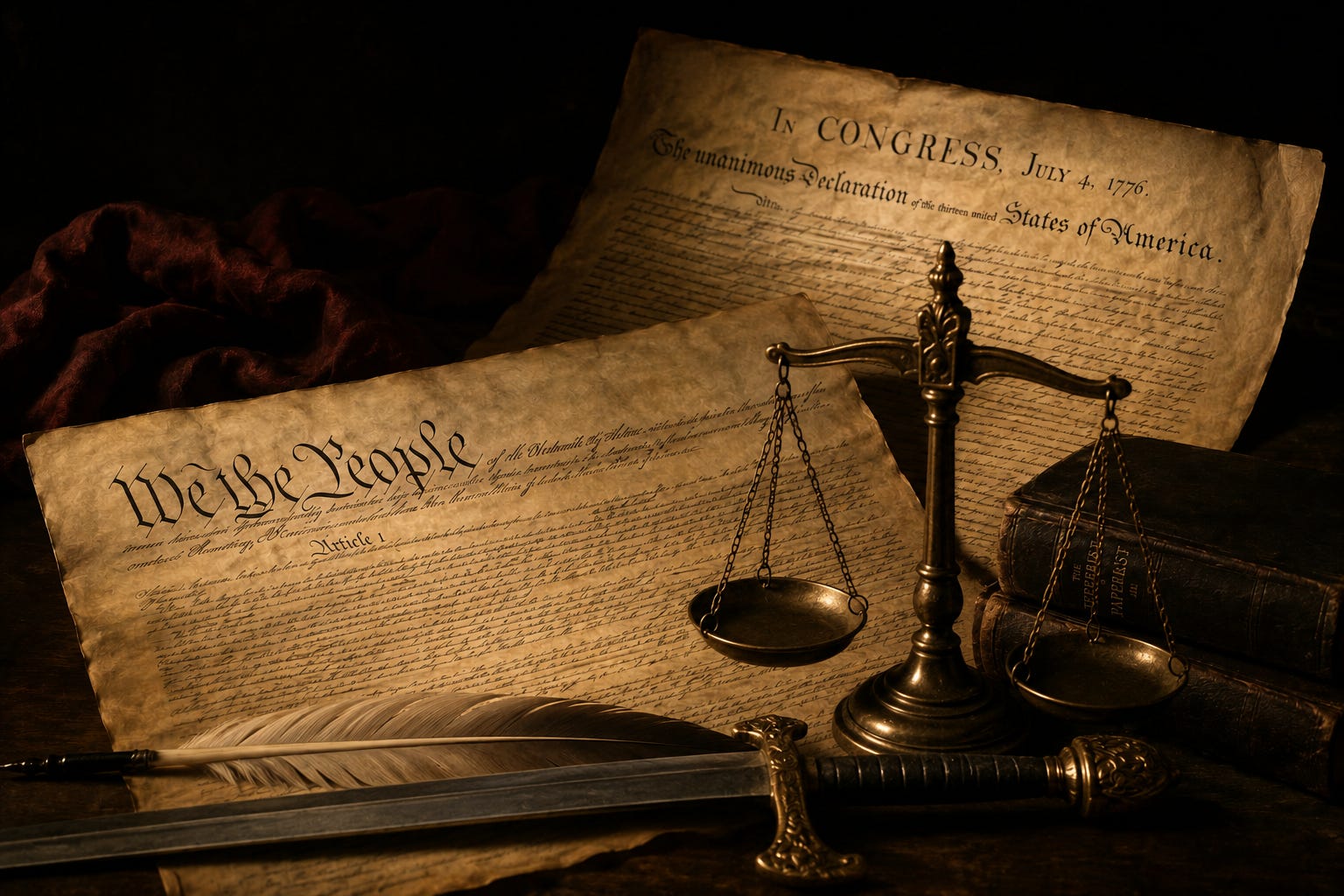
If not, that system is a vicious sham. It does not exist for the common good, it exists to gratify the need for power. It is not legitimate, and those being oppressed have the right to any means of resistance necessary. The Declaration of Independence makes this explicit: “It is their right, it is their duty, to throw off such government.”
I have said nothing here that is not either directly stated, or necessarily implied by the Constitution, and the Declaration of Independence. If it sounds radical, it is because the abuse of power has become so routine that it seems “normal.”
Such a society, habituated to the abuse of power is not free. It is not a society governed by laws, it is governed by the whims and desires of the most brutal. And no human being should be expected to tolerate such a regime.
💯