

The Real d’Artagnan
A hero, remembered.

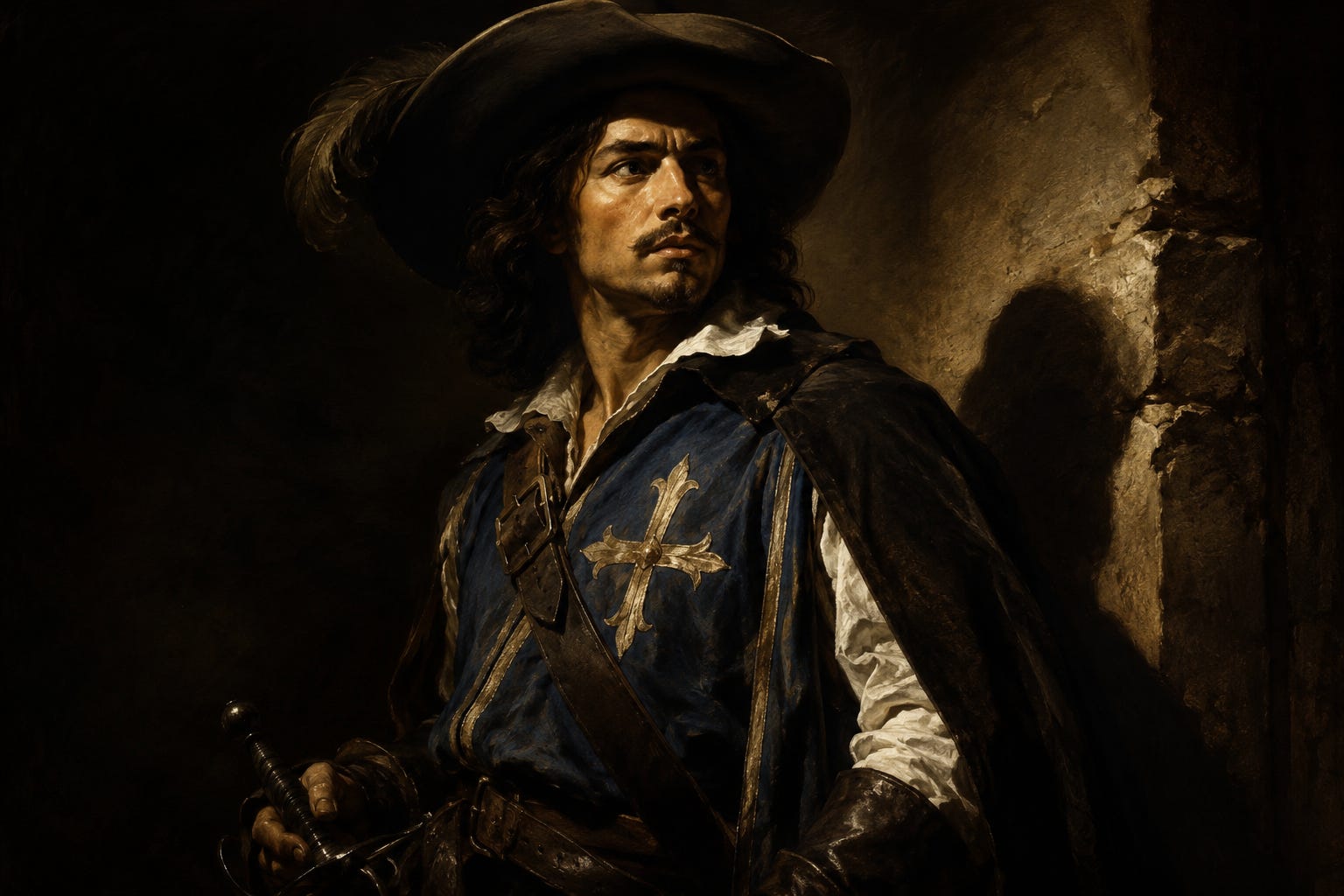
They may have found d’Artagnan’s grave. He has long been a hero of mine, and I will do pilgrimage at the appropriate time. When I was a child, I admired the impetuous, unyieldingly brave hero of Dumas’ fictions, but as I grew older, and came to know the man that the fictional hero was based upon, Charles de Batz de Castelmore d’Artagnan, he became less hero and more model.
His actual life was, in a different way, just as admirable. Where the fictional character’s life was one of adventure, the real d’Artagnan’s life was one of duty. Whatever was needed by the King, he did without hesitation, if not always without complaint. He was often trusted with sensitive diplomatic missions, and was active as a spy during the upheavals of the Fronde. He spent four years as the jailer to the Regime’s most important prisoner, M. Fouquet, former treasury minister who fell out of favor due to more than usual corruption, and worse, outshining the King in displays of ostentatious wealth. Obviously, only the most trusted and discrete of the King’s servants could be trusted with this gilded prisoner, and he was the man for the task.
Being a jailer was a task he found extremely distasteful, and, although d’Artagnan did complain - frequently - to the King and Cardinal Mazarin, the first minister, he treated Fouquet so well - and guarded him so thoroughly and with such respect that the King’s secrets did not escape, and in the end, he enjoyed the respect of all parties, including Fouquet.
But far worse, from d’Artagnan’s point of view, was his time as Governor of Lille. He was an unpopular governor, the representative of an unpopular king with the instincts of a soldier, rather than those of a politician. At the first opportunity, he went back to soldiering where he met his end via a musket ball in the throat leading his Musketeers in a charge against a Dutch fortress.
He left almost nothing for his neglected widow. In an age where men amassed vast fortunes in public life, d’Artagnan left only a portrait of the King, a few personal items, and no money. He had spent every sou on the outfitting of his Musketeers, and on meeting his own expenses in service of the King.
It was said that “d’Artagnan and glory shared the same shroud.” Nevertheless, there was no memorial, and his grave was lost until now. Various statues were erected in the years to come, but they were of Dumas’ creation, not the man who served so faithfully and discreetly.
The best book on the life of the real d’Artangnan:
https://www.amazon.com/DArtagnan-ultimate-musketeer-Geoffrey-Fowler/dp/B0007DLKT0
Interesting. As a boy I also loved and totally believed the film and now, I have more clearer view of my hero .