

Understanding Authoritarians
"If you want a picture of the future, imagine a boot stamping on a human face—forever" - G. Orwell, "1984"

The Trumpists? The Christian Supremicists? Don’t pretend they’re hard to understand. They’re not. You just don’t want to face what they are.
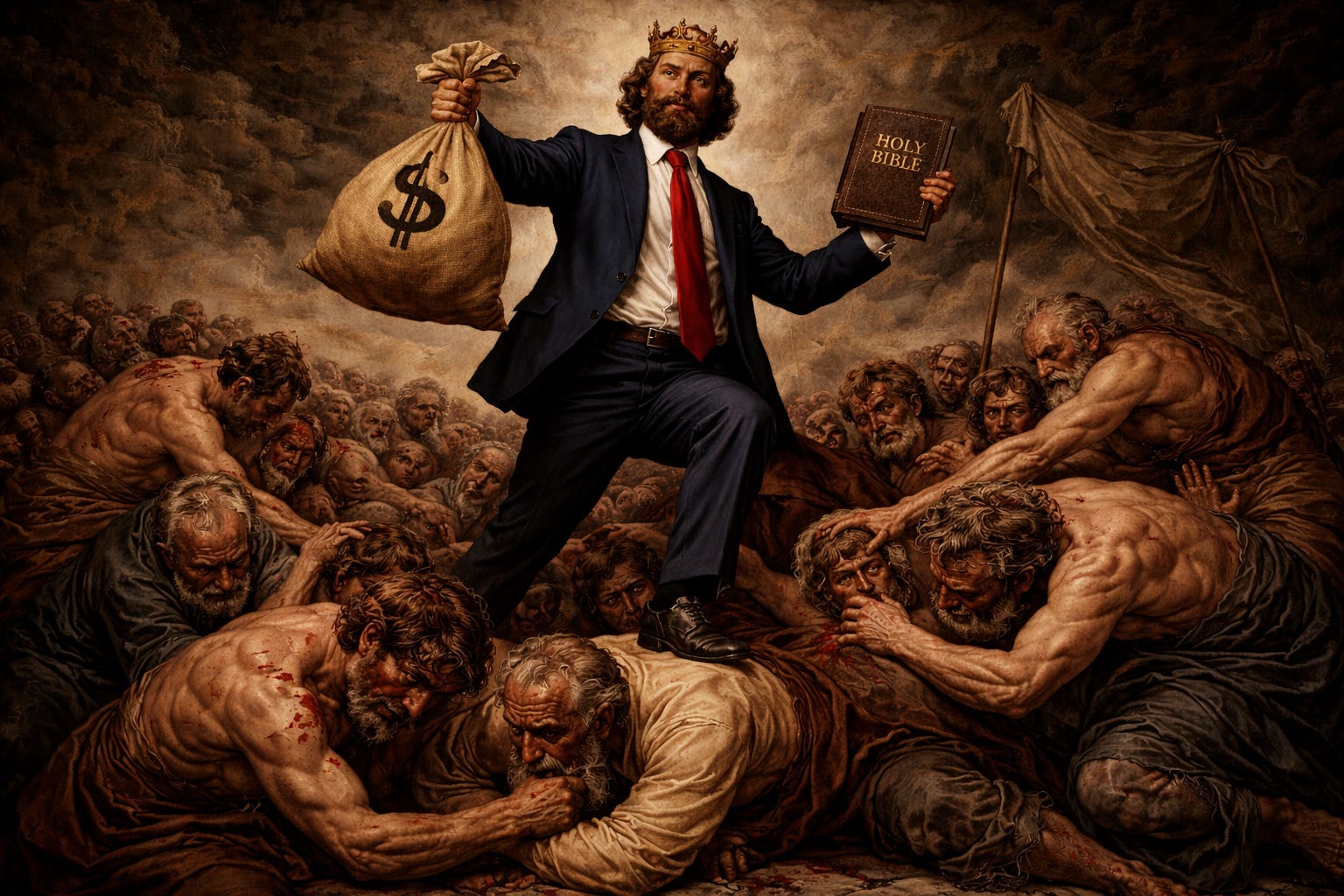
They are authoritarians. Their worldview is based on power – not power to do anything in particular, especially not “good,” but the belief that power is an unqualified good in itself.
To an authoritarian, the world consists of chains of authority – running down from whatever they take to be God, down through the hierarchy. Those above anyone on the chain have the authority to do anything they please to those below them on the chain. There are no such things as “rights,” except the right to dominate downward, and to obey upward.
“Kiss up and kick down” is more than a sadomasochistic pleasure to the authoritarian. It is a duty, a necessary exercise that keeps everyone “in their place” on the chain.
This is why they are so angry when anyone insists that they don’t have to right to abuse their children, indoctrinate them, physically punish them, or force them to parrot their views. It’s not just their right to dominate their children, who are below them on the chain, it is their duty to do so, to fit them to their place in the chain of being. Any attempt to teach them that they have rights to live differently, to think differently than their parents is a denial of their rights, to dominate those who are “naturally” below them.
This is why they hate unions, which are subversive organizations that defy the great chain of authority; and why they despise “liberals” who agitate for the rights of the oppressed.
This is why it is seen as proper by them to discriminate and oppress women, minorities, the disabled, or anyone else they perceive as being beneath them on the chain. All their conception of virtue revolves around control and obedience.
The idea of individual rights – that there are things that those below you on the chain of being cannot be forced to do, is anathema to them. Again, the only rights that exist for them are the rights to obey those above them, and to oppress those below them.
It is not for them to question orders from above, all virtue comes from obedience. It is not for those below them to question their orders. “Respect,” which to them means unquestioning obedience, is, in itself, a virtue.
The relationship between the links on the chain is maintained by punishment. Punishment is a good thing, since it reinforces the social order. There is no such thing as persuasion, only threat. Why should the superior have to convince the inferior?
“I was oppressed, so you should shut up and accept oppression, too,” is the extent of their understanding.
You need to understand that this is, historically speaking, the majority position for humanity. The idea of individual rights that bind authority in any way is a modern concept, native to the Enlightenment (17th and 18th Centuries.) To many, it feels “unnatural” and chaotic. To them, the chain of authority is all that holds back total social chaos. It is how they were trained. And they will go to any length to maintain it.
When someone threatens that order, they viscerally hate them. When someone promises to maintain it, they will obey them unquestioningly. You cannot “free” them, to do so would be to displace their very place in the world, and invite chaos.
Still catching up on reading. Interesting observations.
Ultimately, it is an abrogation of personal responsibility and a blame shifting.